Automotive reference · Car features explained
Types of Sunroofs Explained: Sunroof vs. Moonroof vs. Panoramic Roof
Sliding glass, fixed panoramic roofs, pop-up sunroofs and more: how they work, which ones open, and what to check before buying used.
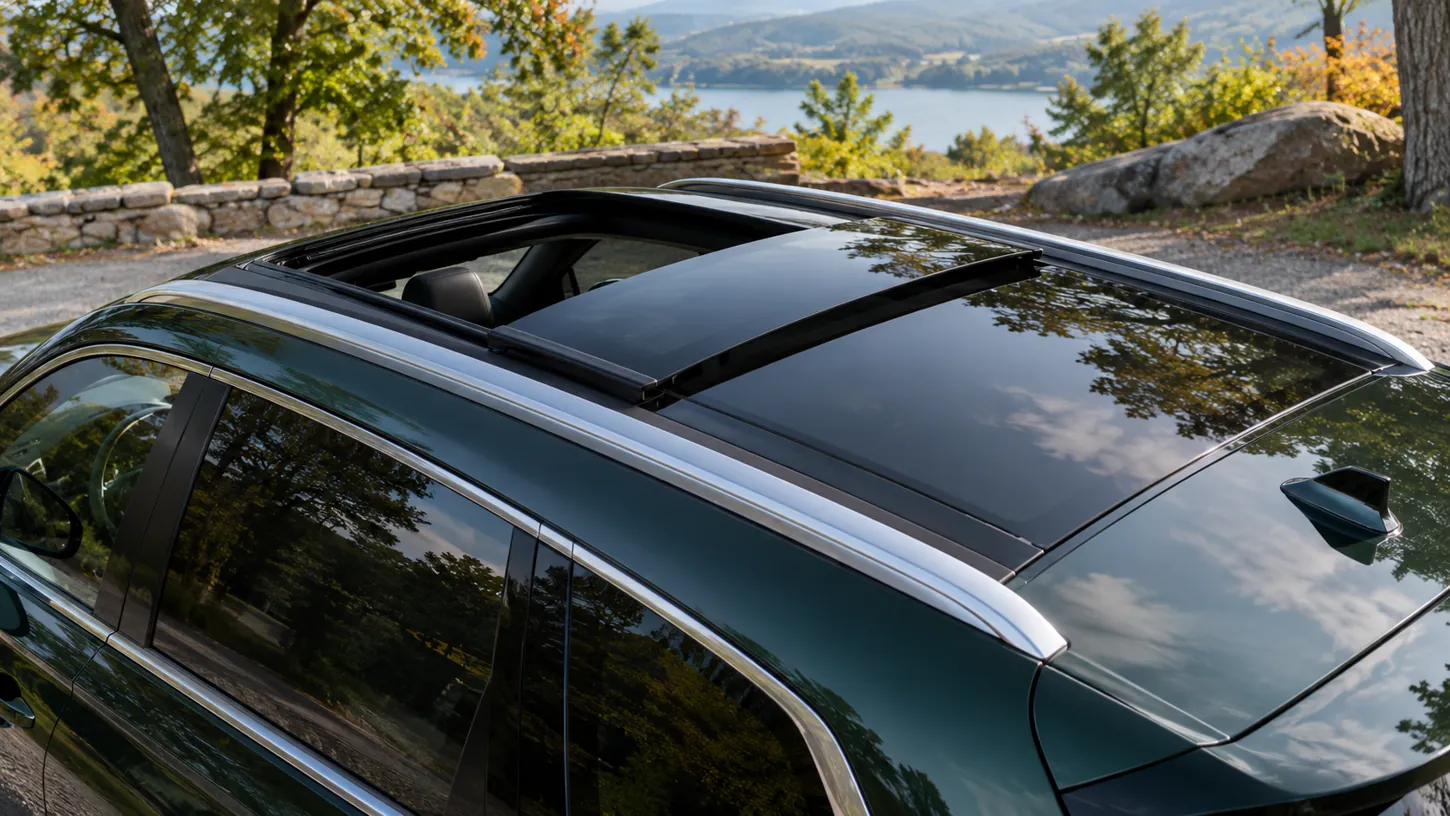
Not all glass roofs work the same way. Some slide open, some only tilt, and others do not open at all. On two cars that look almost identical from outside, one roof might give you fresh air while the other simply brings more daylight into the cabin.
The confusing part is the names. You will see sunroof, moonroof, panoramic roof, dual-panel roof and fixed glass roof in vehicle listings. Sometimes these names tell you how the roof works, but not always. Here is how to tell them apart and what to check before buying.
What is a sunroof? And what is the difference between a sunroof and a moonroof?
Sunroof is the broad term for an opening in the vehicle roof that can admit air or light. Traditional sunroofs included opaque metal panels. Moonroof commonly describes a tinted glass panel, often with a sliding shade, that may tilt or slide open. Today manufacturers and dealerships use the terms quite loosely.
As you compare available used cars, the label alone is not enough. Ask whether the glass actually opens, whether it tilts, and whether the shade operates separately. A listing that says “panoramic moonroof” may describe an opening front panel and a fixed rear panel, not one giant retractable piece of glass.
Types of car roofs at a glance
This chart includes the most common sunroof mechanisms and a few related open-roof designs. Targa roofs and T-tops are included for comparison, but they are not conventional sunroofs.
| Roof type | Light | Fresh air | How it works |
|---|---|---|---|
| Sliding moonroof | Yes | Yes | A glass panel usually slides or tilts |
| Panoramic roof | Yes | Sometimes | A larger glass area, one or more panels |
| Fixed glass roof | Yes | No | Fixed tinted or treated glass |
| Pop-up sunroof | Often | Tilt only | Hinged panel, sometimes removable |
| Spoiler sunroof | Usually | Yes | Slides backward above roof |
| Inbuilt sunroof | Usually | Yes | Retracts below roof sheet metal |
| Dual-panel roof | Yes | Varies | Front and rear glass sections |
| Smart-glass roof | Adjustable | Varies | Electronically adjustable glass |
| Targa roof | Varies | Yes with section open | Sports car removable or retractable panel |
| T-top | Varies | Yes when removed | Two removable panels |
Explore how different car roofs open
It is easier to understand these designs when you can see what moves. Select a roof style below to compare its basic layout. The drawings show typical designs, not the precise mechanisms in every car.
Inbuilt sliding sunroof
The glass retracts into the area between the exterior roof and headliner. Many versions also tilt for ventilation.
Opens for airflowIllustrations are conceptual. Roof directions and opening positions are not to scale. Actual equipment varies by model and trim.
The different types of sunroofs and car roof designs
1. Standard sliding moonroof
This is the roof most people picture when they hear “sunroof.” A tinted glass panel sits above the front seats, usually with a shade that you can move independently. Press a button and the panel slides open, tilts at the rear, or both. Some cars move the glass beneath the roof while others lift it above the roof surface.
A standard moonroof is a nice middle ground. You get fresh air and an open feeling without a huge glass roof stretching over the second row. For used-car shoppers, it also tends to be easy to inspect because the opening, tracks and shade are concentrated in one area.
2. Panoramic sunroof
A panoramic roof covers considerably more of the cabin than a standard moonroof. It is especially popular in SUVs and crossovers, where rear passengers benefit from the extra light. Many versions use two pieces of glass, with an opening front panel and a fixed rear panel. Others do not open at all.
One of the first questions to ask is “Does the panoramic roof actually open?” There is no universal answer. Even when it opens, the opening may be smaller than the full glass area. Also check whether the interior shade reaches across both rows or operates in separate sections.
3. Fixed panoramic glass roof
A fixed glass roof is exactly what it sounds like. The glass is part of the roof and does not retract or vent. It brings in daylight and makes the cabin feel more open, but there are no moving glass panels or sunroof tracks to operate.
Fixed glass has become particularly recognizable on electric vehicles. The Tesla Model Y, for example, uses a fixed glass roof, and Tesla describes UV protection in its vehicle glass. Keep in mind that UV protection and heat rejection are different things. A roof can block much of the ultraviolet light while still allowing noticeable heat into the cabin on a sunny day.
4. Pop-up sunroof
Pop-up roofs are a simpler, older style that raises at the rear edge to let air move through the cabin. They were common as aftermarket additions on older cars. Some use a small manual latch rather than a motor. On certain designs, the entire glass panel can be removed and stored.
They do not give you the wide opening of a sliding glass roof, but they can provide ventilation without a complicated cassette. On a used car, look closely at the perimeter seal, the latch and the quality of the installation, especially if the roof was added after the car left the factory.
5. Spoiler sunroof
A spoiler sunroof lifts the glass slightly above the roof, then slides it backward over the exterior. You may hear the term tilt-and-slide or top-slider, although manufacturers do not always use the names in exactly the same way. Unlike an inbuilt system, its moving panel stays visible on top when open.
Because the glass does not need to disappear as far into the ceiling, this style can work where the space below the roof is limited. The trade-off is that the exposed panel changes the exterior profile when open. Both wind noise and the amount of usable opening depend on the specific design.
6. Inbuilt sunroof
With an inbuilt sunroof, the glass moves backward into space between the metal roof and the cabin headliner. From outside, the panel appears to vanish when opened. Many factory-installed sliding moonroofs use this kind of setup.
The roof mechanism and its cassette take up room above the occupants, which can sometimes reduce headroom. This matters most if you are tall or already sit close to the ceiling. Test the seating position with the roof fully closed and the shade in place before assuming there is enough room. Our power seat adjustment guide explains height, cushion tilt and other controls that help you check the fit.
7. Dual-panel sunroof
A dual-panel roof has separate glass areas above the front and rear portions of the cabin. On some vehicles, only the front panel opens. On others, both panels have separate operating features or shades. The term can overlap with “panoramic roof” when the two panels together provide a large glass area.
The rear panel can be especially enjoyable for back-seat passengers, but do not assume it operates independently. Test both sections, including their shades and any separate controls.
8. Smart-glass or dimmable roof
Instead of only relying on a cloth shade, some luxury cars use glass that changes how much light passes through it. Different systems use different technologies, and some switch between distinct clear and opaque-looking states instead of providing continuously variable tint.
Porsche's Taycan has offered a panoramic roof with Variable Light Control, which uses electrically controlled sections to adjust the roof's transparency. It is an interesting solution because you can change the feel of the cabin without sliding the roof panel out of the way. It is also more specialized equipment, so checking that every setting works is important when shopping used.
9. Targa roof
A targa roof belongs more to the sports-car world. It typically has a removable or retractable section above the occupants while leaving substantial roof structure, such as a rear section or hoop. The Chevrolet Corvette is a familiar example of a car with a removable roof panel on certain versions.
You can get a much more open-air experience than with a standard moonroof, but the panel may require manual removal and a designated storage spot. Check the roof's latches, seals and storage hardware on any used sports car. It is not the same thing as a conventional sliding sunroof.
10. T-top roof
T-tops use two removable roof sections, one above each front occupant, with a central bar left between them. They are closely associated with older American performance cars, including some Firebirds and Camaros. With both panels removed, the cabin feels much more open than it does with a small sunroof.
On a used T-top car, confirm that both panels are present and fit properly. Look for shrinking seals, damaged latches, water marks and places where wind noise can enter. Finding replacement trim or roof hardware may be more difficult on an older model.
Panoramic vs. regular sunroof: what actually changes?
The biggest difference is how much of the cabin gets natural light. A conventional moonroof generally concentrates the opening above the front seats. A panoramic roof may reach past the second row, which changes the experience for passengers behind the driver. Whether a panoramic roof opens is a separate question.
Regular moonroof
Usually easier to cover with a compact shade, gives front occupants light and fresh air, and may have a smaller mechanism. It can be a good choice if you mainly care about ventilation and do not need the extra glass above rear passengers.
Panoramic glass
Brings more daylight into the cabin and may make an SUV feel roomier. You may get an opening front panel, a fixed rear panel, or a completely fixed design. Heat, wind noise, cost and headroom should be evaluated on the actual car.
Are panoramic roofs hotter?
They can be, but the answer depends on the glass coatings, tint, shade, climate and where the vehicle is parked. A large glazed area may increase sun exposure, while treated glass and a good shade can reduce it. Do not judge a roof's heat performance just by how dark it looks from outside. Try the car in direct sunlight when possible. Compare the roof and shade together with the seat upholstery and interior materials, which also affect how the cabin feels in warm weather.
Do panoramic roofs reduce headroom?
Some do. Retracting roof panels need room for rails, motors and a cassette. Other designs use packaging that preserves more space. A fixed glass roof may provide a different ceiling profile. Check the manufacturer's measurements, then sit in the front and rear seats yourself.
Which type of car roof is best?
There is no single best design. Think about whether you want fresh air, daylight, a dramatic open-air experience or fewer moving parts. Your priorities will point toward different options.
A sliding or spoiler-style roof is worth considering if ventilation matters most. Confirm opening size, noise and controls on the vehicle.
Also remember that a roof is only one feature of the vehicle. A great driving position, low cabin noise, good air conditioning and comfortable seats can matter more day to day than the largest glass roof available.
Common sunroof problems and maintenance
Sunroofs use seals, guides, channels and, in many designs, water-management drains. It is normal for some roof assemblies to manage water through designed channels rather than relying on a perfectly watertight outer seal alone. Problems happen when water cannot drain as designed, a seal is damaged, or a roof does not close properly.
Water leaks and stains
Water marks around the headliner, A-pillars, overhead console or ceiling lights are worth investigating. The source might be a blocked drain, a shifted seal, body seam damage or something unrelated to the roof. Do not assume every wet headliner means the glass itself is cracked.
Slow, stuck or noisy operation
Grinding, uneven movement and a roof that stops halfway can indicate an obstruction, track or motor issue. Some systems have anti-pinch protection and reset procedures. Do not force the panel or repeatedly cycle a jammed roof. Follow the vehicle's owner's manual and have it inspected if needed.
Shade and trim problems
Power shades are separate moving systems. Check for fabric sagging, broken guide pieces and rattles. On a fixed glass roof, the absence of an opening mechanism does not mean the interior shade or glass itself is maintenance-free.
Basic care means keeping visible roof edges clear of leaves and grit, using the cleaning methods specified by the manufacturer, and watching for changes in operation. Avoid inserting wire or compressed air into drains unless the manufacturer specifically instructs you to do so, because that can damage or disconnect drainage components.
How to inspect a sunroof when buying a used car
A large glass roof can be a great feature, but it is also worth spending an extra few minutes testing it during a vehicle inspection. Use this checklist alongside our guide to warning signs when buying a used car.
- Open and close it fully. Confirm the complete operating range, including tilt mode where equipped.
- Listen carefully. Grinding, repeated clicking or jerky movement may indicate a problem.
- Test the shade. Open and close manual or powered shades without pulling or forcing them.
- Look above the doors and windshield. Check the headliner and pillars for water marks, ripples or musty smells.
- Inspect visible seals. Look for tears, gaps, dirt buildup and hardened weatherstripping.
- Examine the glass. Note chips, cracks, scratches and evidence of previous replacement.
- Ask about repair history. Roof glass, tracks, motors and water leaks can involve significant labor.
- Check the correct features. Use the window sticker, manual or VIN-specific equipment information to confirm whether your particular roof opens.
If everything works, the roof still needs to be evaluated as part of the car's overall condition. A clean, properly operating moonroof can be a nice feature. A malfunctioning panoramic system may turn an attractive option into an expensive repair.
Frequently asked questions about types of sunroofs
Is a sunroof the same as a moonroof?
In modern listings, the terms are often used interchangeably. Traditionally, moonroof referred to a tinted glass sunroof, while sunroof was the broader term that could include opaque panels.
Do panoramic sunroofs open?
Some do and some do not. Many have an opening front panel with a fixed rear glass panel. Other panoramic roofs are completely fixed.
What is the difference between a panoramic sunroof and a regular sunroof?
A panoramic roof generally covers a much larger part of the cabin. A regular moonroof is usually a smaller opening above the front seats.
What is a spoiler sunroof?
It is a sunroof whose glass tilts up and slides backward over the outside of the roof instead of retracting entirely beneath it.
What is an inbuilt sunroof?
It is a sliding roof that stores its moving panel within the roof and headliner area, hiding the panel when open.
Does a fixed glass roof open?
No. Its purpose is to bring daylight into the cabin without an opening glass panel. Some fixed roofs include electric shades or dimming technology.
Are panoramic sunroofs more likely to leak?
A larger or more complex roof can have more seals and components to inspect, but actual leak risk depends on design, condition and maintenance. A well-functioning roof should manage rainwater correctly.
Are sunroofs safe in a rollover?
Roof strength and occupant protection depend on the vehicle's overall engineered structure and safety systems, not merely whether the roof has glass. Wear seat belts and evaluate safety using vehicle-specific crash-test data from NHTSA.
Are panoramic roofs worth it?
They can be a worthwhile upgrade for people who enjoy natural light, particularly rear passengers. Check whether the roof opens, how well its shade works and whether it affects headroom or cabin temperature.
What is the difference between a T-top and a targa roof?
A T-top has two removable sections separated by a central bar. A targa generally uses one removable or retractable section while retaining substantial surrounding roof structure.
Can a sunroof be added to a car?
Some aftermarket systems have been fitted to vehicles, but cutting into the roof requires careful engineering, installation and water management. It is not a simple cosmetic modification.
How can I tell which roof my car has?
Check the owner's manual, factory window sticker and equipment list for the exact model year. Test the controls with the car parked. Appearance alone may not reveal whether the panel opens.
Final thoughts
The next time you see “panoramic roof” in a car listing, take a closer look. Is it one glass panel or two? Does it slide, tilt or stay fixed? Does it have a shade? Those details tell you more about the everyday experience than the name alone.
At Discount Auto Quincy, we recommend comparing roof features the same way you would compare seats, sound systems or safety equipment. Check that everything operates properly and choose the vehicle that makes sense for how you actually drive. Ask our Quincy team about a particular vehicle's roof or arrange a visit to try the controls yourself.
See what's available in Quincy
Shop used cars, trucks and SUVs at Discount Auto Quincy. Look through the photos and equipment information, then check roof features in person before deciding.
Sources and further reading
The diagrams are original conceptual illustrations. Terminology and vehicle examples were cross-checked against the following references. Features may change by trim, market and model year.