Automotive reference · Car features explained
Power Seat Adjustments Explained: 4-Way to 20-Way Seats
What those adjustment numbers mean, how each control works, and what to check before choosing a car that fits you.
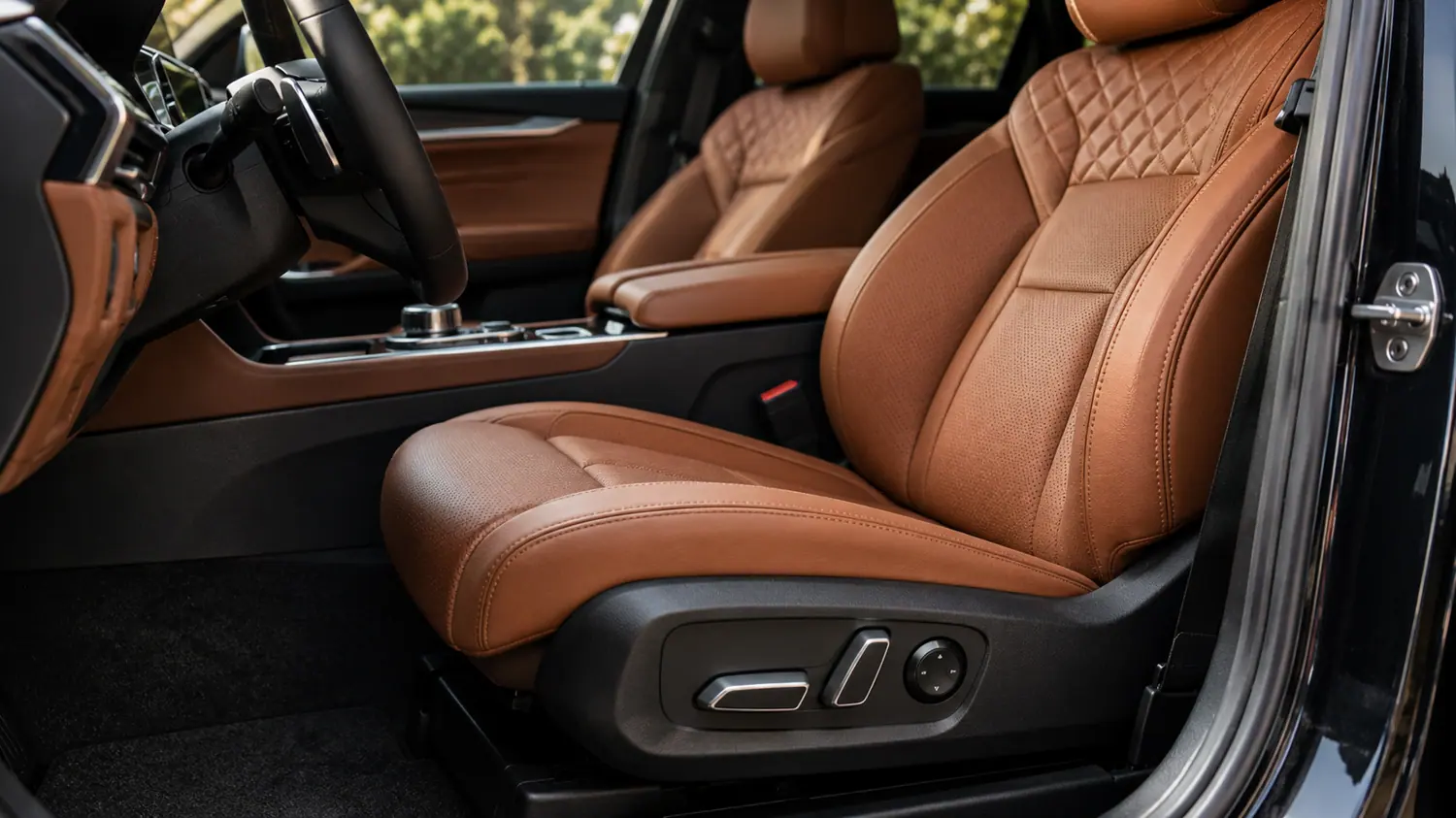
Car manufacturers have a habit of turning simple features into confusing numbers. One car advertises an 8-way power driver's seat. Another has 10-way adjustment. A luxury SUV might promise 16-way or even 20-way seats. It sounds like an easy comparison, but it isn't quite that simple.
Those numbers usually describe the number of directions the seat can move under power. Forward and backward, for example, are counted as two ways, even though they use the same switch. Seat height, cushion tilt, backrest angle and lumbar support can all add to the total.
As you compare available used vehicles, the catch is that manufacturers don't always count the same functions. Some list lumbar support separately, while others include it in the advertised number. A good power seat is about being able to find a comfortable position, not simply having the biggest number on the window sticker.
What does 8-way or 10-way power seat mean?
An 8-way power seat commonly moves in eight directions: forward, backward, up, down, front-cushion tilt up, front-cushion tilt down, seatback recline and seatback upright. In other words, there are often four controls or axes with two directions each.
A 10-way seat may add two-way lumbar adjustment to those eight movements. A 12-way seat may add four-way lumbar support instead, letting you adjust not only how far the support presses outward but also where it sits on your lower back.
Those are examples, not rules. The features and the counting method depend on the car. The driver's seat may also have more adjustments than the passenger's.
4-way, 6-way, 8-way, 10-way, 12-way and 20-way seats compared
Start with the chart below. It shows common arrangements, rather than a standard followed by every automaker.
| Seat | What it may adjust | What you'll notice |
|---|---|---|
| 4-way | Two paired movements, often slide and recline | Basic positioning |
| 6-way | Slide, recline and height, or a different third function | More room to find the right height |
| 8-way | Slide, recline, height and cushion tilt | Better thigh support and driving posture |
| 10-way | Often 8-way plus 2-way lumbar | Adjustable lower-back pressure |
| 12-way | Often 8-way plus 4-way lumbar, or another mix | More precise back support |
| 14 to 16-way | Additional cushion extension, side bolsters or backrest segments | More ways to match the seat to your body |
| 18 to 20+ way | May include upper-backrest, headrest, bolster and thigh adjustments | Extensive personalization in some luxury seats |
Does a 20-way seat have 20 separate buttons? No. A single switch can control several directions. Some vehicles use side-mounted controls, some have seat-shaped switches on the door, and others put more advanced adjustments in the infotainment screen.
Also, heated seats, ventilation and massage don't automatically count as additional adjustment ways. They may be included in a seat package, but they do different jobs.
Illustrative configuration
8-way power seat
Often offers powered slide, seat height, cushion tilt and recline.
- Forward / backward
- Up / down
- Cushion front up / down
- Recline / upright
There is no universal feature count for each number. Check your model’s specifications and owner’s manual.
Try the interactive seat adjustment explorer
Select a function below to see the part of the seat that moves. The seat is simplified so the movement is easy to follow. Your car's actual switches and range of movement may look different.
INTERACTIVE VISUAL GUIDE
Explore how car seat adjustments work
Choose a feature to see where it works on the seat and the direction it adjusts. Different vehicles have different controls and ranges.
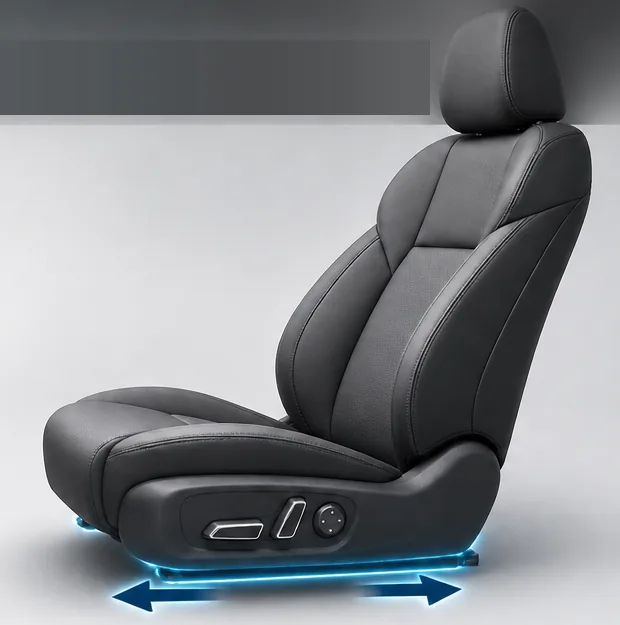
Forward and backward slide
Moves the entire seat toward or away from the pedals and steering wheel.
Illustration shows the location and direction of movement, not a particular manufacturer’s mechanism. Some features are only available on certain vehicles.
What each power seat adjustment actually does
1. Forward and backward slide
This is the adjustment most drivers use first. Sliding the seat closer makes it easier to reach the pedals. Sliding it backward creates more legroom. A power motor handles the movement in small increments, rather than relying on a manual release bar.
Don't sit so far back that you need to stretch for the brake pedal. You should be able to press it firmly without lifting your hips off the seat.
2. Seat height
Height adjustment raises or lowers your seating position. Shorter drivers may use it to see over the dashboard more comfortably. Taller drivers often lower the seat for extra headroom. Make sure you still have a clear view through the windshield and can reach the controls easily. Roof packaging matters, too: our guide to sunroofs and panoramic roofs explains why you should check headroom with the roof and shade closed.
3. Cushion tilt
Cushion tilt changes the angle of the bottom of the seat, usually by raising or lowering its front edge. This can make a big difference on longer drives. A little more support under the thighs can feel good, but too much upward tilt may press against the backs of your knees.
4. Seatback recline
The recline switch changes the angle between the seat cushion and the backrest. Most drivers are comfortable with a fairly upright position that supports the shoulders and allows relaxed control of the wheel. Leaning too far back can make it harder to reach the steering wheel and can affect seat belt positioning.
5. Two-way lumbar support
The lumbar area is the lower part of the backrest. A typical two-way lumbar feature makes a support pad push outward or retract. You adjust it until your lower back feels supported without being pushed too far forward.
6. Four-way lumbar support
Four-way lumbar usually moves the support in and out and up and down. The added vertical adjustment matters because not everyone's lower back sits at the same height. It's often one of the most useful upgrades for drivers who spend a lot of time in the car.
7. Extendable thigh support
Some luxury and sport seats have a cushion extension that slides forward underneath the thighs. Taller drivers may appreciate the extra support, especially when the standard cushion feels short. It should still leave some space behind your knees.
8. Adjustable side bolsters
Bolsters are the raised sections along the sides of the cushion or backrest. Adjustable bolsters can move inward to hold the torso more securely or outward to give you more room. They're common in some premium sport seats. A snug setting can feel great on winding roads, but uncomfortable if it's too narrow.
9. Upper backrest and headrest
Advanced seats may let you change the upper backrest angle separately from the lower section, or move the headrest under power. These are the kinds of controls that can push seat adjustment counts into the high teens or twenties. Head restraints are primarily safety equipment, so follow the vehicle's manual when positioning them.
Real examples from current vehicles
The best way to see why these numbers can be confusing is to look at actual specifications. The examples below use published 2026 model information, but seat equipment can change with trim, package and market.
| Vehicle | Published equipment | Why it matters |
|---|---|---|
| 2026 Toyota Sienna XLE | 8-way power driver's seat with power lumbar; 4-way power passenger seat | The lumbar feature is described separately |
| 2026 Toyota Grand Highlander, select trims | 10-way driver's seat including lumbar; 8-way passenger seat | The listing includes lumbar in the driver's count |
| 2026 Genesis Electrified GV70, select trims | 12-way driver's seat with 4-way lumbar; 8-way passenger seat | A clear example of lumbar adjustments being specified |
| 2026 Genesis GV70, select higher trims | 16-way driver's seat with power side bolster and cushion extension | Extra adjustments extend beyond standard seat positioning |
| 2026 BMW X5 with multi-contour seats | Advertised 20-way power front seats on certain configurations | Includes more specialized upper-body and headrest controls |
One detail to watch on Toyota listings: Some brochures describe an 8-way seat plus 2-way lumbar, while other descriptions say a 10-way seat including lumbar. Those descriptions can cover a similar set of adjustments. The individual functions tell you more than the headline number.
How to read power seat buttons and symbols
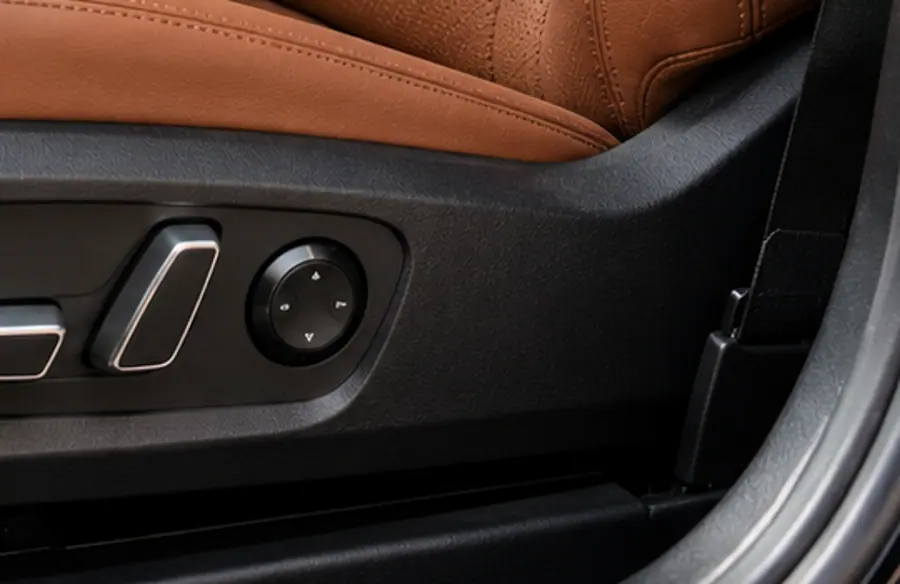
Most power seat switches are positioned on the side of the driver's seat near the door. A long horizontal switch shaped like a seat cushion usually controls seat slide and may also control height or tilt. A smaller upright switch often changes the backrest angle. A round or four-direction switch may control lumbar support.
Luxury cars sometimes put seat-shaped controls on the door where they're easier to see. You may also find a button marked with an image of a seat and arrows, or a screen menu for the less frequently used adjustments.
Common controls
Long horizontal rocker: Slide the seat; move the switch ends up or down on some cars to adjust height or cushion angle.
Upright rocker: Recline or straighten the backrest.
Round four-way button: Adjust lumbar pressure or height on equipped vehicles.
Extra controls
Small cushion extension switch: Lengthen or shorten thigh support.
Seat-shaped door controls: Often mirror the part of the seat being adjusted.
M, 1 and 2: Memory seat buttons for saving preferred settings, not extra movement directions.
It's worth testing the switches in the actual vehicle. A switch that appears to have four directions may operate fewer functions than you expect, and some movements may only be available through an on-screen menu.
Features that aren't the same as more seat adjustments
Memory seats
Memory saves one or more seating positions. In a shared family car, that can be more convenient than having another four adjustment directions. Some vehicles also remember mirror and steering wheel settings, or move the seat back automatically to make it easier to get out.
Heated and ventilated seats
Seat heating and ventilation affect temperature, not position. Ventilation may help during hot weather or on long drives. A basic 8-way power seat with ventilation could be more comfortable in summer than a more adjustable seat without it. Upholstery matters, too: our guide to leather, cloth and synthetic interior materials explains how the surface affects comfort and care.
Massage and active comfort systems
Some luxury seats have massage programs, inflatable air chambers or automatic posture adjustments. These can help vary pressure during a long journey, but they shouldn't be treated as a substitute for finding a good driving position in the first place.
Manual seats and mixed controls
Not every adjustable seat is fully electric. Some vehicles have manual fore-and-aft movement but powered lumbar support. Others combine power recline with manual height controls. A listing that says “power lumbar” doesn't necessarily mean the entire seat is powered.
Which power seat is best for you?
For many people, a well-designed 8-way power seat does everything they need. The most useful upgrade is often lumbar adjustment, followed by cushion tilt or thigh extension, depending on your height and build. Someone who shares a vehicle with another driver might appreciate memory settings more than 20-way adjustment.
| Your priority | Worth looking for |
|---|---|
| Daily commuting | 8-way adjustment and a comfortable backrest |
| Frequent highway trips | Adjustable lumbar and thigh support |
| Taller drivers | Good height range and cushion extension |
| Shorter drivers | Height adjustment and adequate pedal reach |
| Shared vehicles | Memory positions |
| Sporty driving | Adjustable bolsters |
| Hot-weather comfort | Ventilation, regardless of adjustment count |
A quick way to set up your driver's seat
Start with your distance from the pedals. Adjust the seat so you can press the brake fully without straightening your leg completely. Next, set the height so you can see the road and instruments without ducking or stretching. Adjust the backrest so you can reach the steering wheel with relaxed, slightly bent arms.
Then fine-tune cushion tilt and lumbar support. The aim is support without pressure points. Afterward, adjust the head restraint and mirrors, and check that your seat belt sits correctly. Always make your adjustments while parked. Follow your owner's manual for the head restraint and seat belt, and review NHTSA's air-bag and seating-position guidance when setting your distance from the steering wheel.
Once you've found a comfortable setting, take a longer test drive if possible. A seat can feel excellent for two minutes and less impressive after half an hour. Pay attention to thigh pressure, lower-back support and how easily you can enter and exit the vehicle.
What to check on a used car with power seats
Power seat features are worth testing during a used-car inspection. Move the seat through its full travel, forward and back, all the way up and down, and through the available cushion and recline positions. It should move smoothly and respond consistently. Listen for clicking, grinding or motors that seem to struggle. Include these checks alongside the broader warning signs to inspect before buying a used car.
Test the lumbar support and any extra bolsters or thigh extenders. Some of these movements are subtle, so placing a hand against the cushion may help you feel whether they're working. Check the passenger's seat separately, since it may have fewer powered functions than the driver's seat.
If the vehicle has memory settings, save a position, move the seat, then recall it to make sure the feature works. Check for warning lights, damaged switches, torn seat trim or loose panels. Seats that move unevenly or stop partway through their travel may need diagnosis.
And don't rely on the listing title alone. A VIN-linked factory equipment report, original window sticker, manufacturer's brochure and owner's manual can help identify the exact seat package. A vehicle advertised with “leather power seats” may still have basic adjustments, while a cloth seat can offer surprisingly good comfort and support.
Frequently asked questions about power seats
What is an 8-way power driver's seat?
It commonly provides forward and backward slide, up and down height, cushion tilt in two directions, and recline in two directions. The exact arrangement varies by vehicle.
What is the difference between 8-way and 10-way power seats?
A common difference is the addition of 2-way lumbar support. Some automakers list lumbar support separately, so check the feature list instead of assuming every 10-way seat is the same.
What does 12-way power seat mean?
A 12-way seat offers twelve counted movement directions. One common arrangement is eight basic directions plus 4-way lumbar support, but other combinations are possible.
What is 4-way lumbar support?
It typically allows the lower-back support to move inward, outward, up and down. That makes it easier to position support at the right height and depth.
Are 20-way seats worth it?
They can be, especially for people who need very specific thigh, shoulder or bolster adjustments. But more controls don't guarantee greater comfort. Seat shape and how it fits your body matter more.
Does a 6-way power seat include lumbar support?
Not necessarily. A common 6-way arrangement includes seat slide, height and recline. Lumbar may be separate, manual or unavailable.
Do manufacturers all count seat adjustments the same way?
No. Some include powered lumbar in the total and others list it separately. Even within one brand, naming can vary by model year and equipment package.
Does power seat mean heated seats?
No. Power adjustment moves the seat. Heating warms it. They are separate features and can be offered independently.
What happens if a power seat stops working?
Possible causes include a blown fuse, bad switch, motor problem, wiring issue or an obstruction in the tracks. Avoid forcing the seat and arrange for a qualified inspection.
Are manual car seats less comfortable?
Not always. A supportive manual seat can be more comfortable than a poorly shaped power seat. Power controls mainly make fine adjustments more convenient.
Is a 10-way power seat better than an 8-way seat?
It may offer useful extra control, often lumbar support, but the better seat is the one that fits you. Test both rather than judging by the number alone.
Final thoughts
When you see an 8-way, 10-way or 20-way power seat in a vehicle description, think of it as a starting point. The number gives you an idea of how adjustable the seat might be, but it doesn't tell the whole story.
Look for the features you'll actually use. Height and cushion tilt make everyday positioning easier. Lumbar adjustment can help support your lower back. Thigh extensions and side bolsters are useful for some drivers, while memory settings are handy when multiple people drive the same car.
At Discount Auto Quincy, we think it's worth comparing the seats in person, along with the rest of a vehicle's equipment, condition and history. A short test drive often tells you more than a long list of options. Contact our Quincy team to ask about the seat equipment in a particular vehicle or arrange a visit.
Find a vehicle that feels right
See the used cars, trucks and SUVs available at Discount Auto Quincy. Compare comfort features, seat controls and overall condition before choosing your next vehicle.
Sources and further reading
Vehicle examples were checked against the sources below. Equipment can vary by trim, package, model year and region.